Can't Stop Watching the Chart After Entering a Trade? What to Do
Review the trade’s exposure, exit rule and monitoring requirements before choosing when to check it. If you keep reopening the chart, first record what prompts each check. Unclear exits or an uncomfortable amount at risk are possibilities, not a diagnosis. Reducing risk or returning to simulation can be options; no fixed percentage guarantees calm.
A self-check before changing the routine
Write answers to four questions:
- What event ends the idea, and what order or action implements it?
- Is the planned risk based on the actual position and contract size?
- Does this rule require intrabar action or only completed candles?
- What should happen if an alert is late, an order is rejected or the connection fails?
If any answer is missing, a timer alone will not fix the plan. Use the plan template and distinguish stop triggers from candle-close invalidation.
What changes when position size changes?
Hypothetical arithmetic: account 1,000 USD, stop distance 2% of entry, linear exposure, exact fills and no costs.
| Planned cash risk | Position value | Gross loss on a 1% adverse move |
|---|---|---|
| 10 USD | 10 ÷ 0.02 = 500 USD | 5 USD |
| 100 USD | 100 ÷ 0.02 = 5,000 USD | 50 USD |
The second exposure requires financing or leverage beyond the account’s cash. This comparison is not a recommendation or a broker margin calculation. It shows why the same price movement changes more money at a larger size. A planned stop amount is not a guaranteed maximum loss.
When does checking at candle close make sense?
When the rule explicitly uses completed candles. For a continuously running 24-hour market, M15 has 96 candle closes per day, H1 has 24, H4 has 6 and D1 has 1. These are counts of candles, not recommended check frequencies. Session-based markets and feed boundaries differ.
A fixed stop can trigger between those times. A close-based exit may wait through an adverse move and execute beyond the reference level. If your schedule cannot meet the monitoring rule, reconsider the exercise or strategy rather than assuming a larger timeframe makes it safe.
How can I test a less intrusive routine?
In simulation, write review times and permitted interventions before starting. For each urge to check or change an order, record the time, reason and whether the written rule required it. At review, count unplanned interventions and inspect any missed rule event. Do not infer that fewer checks caused better returns from a few outcomes.
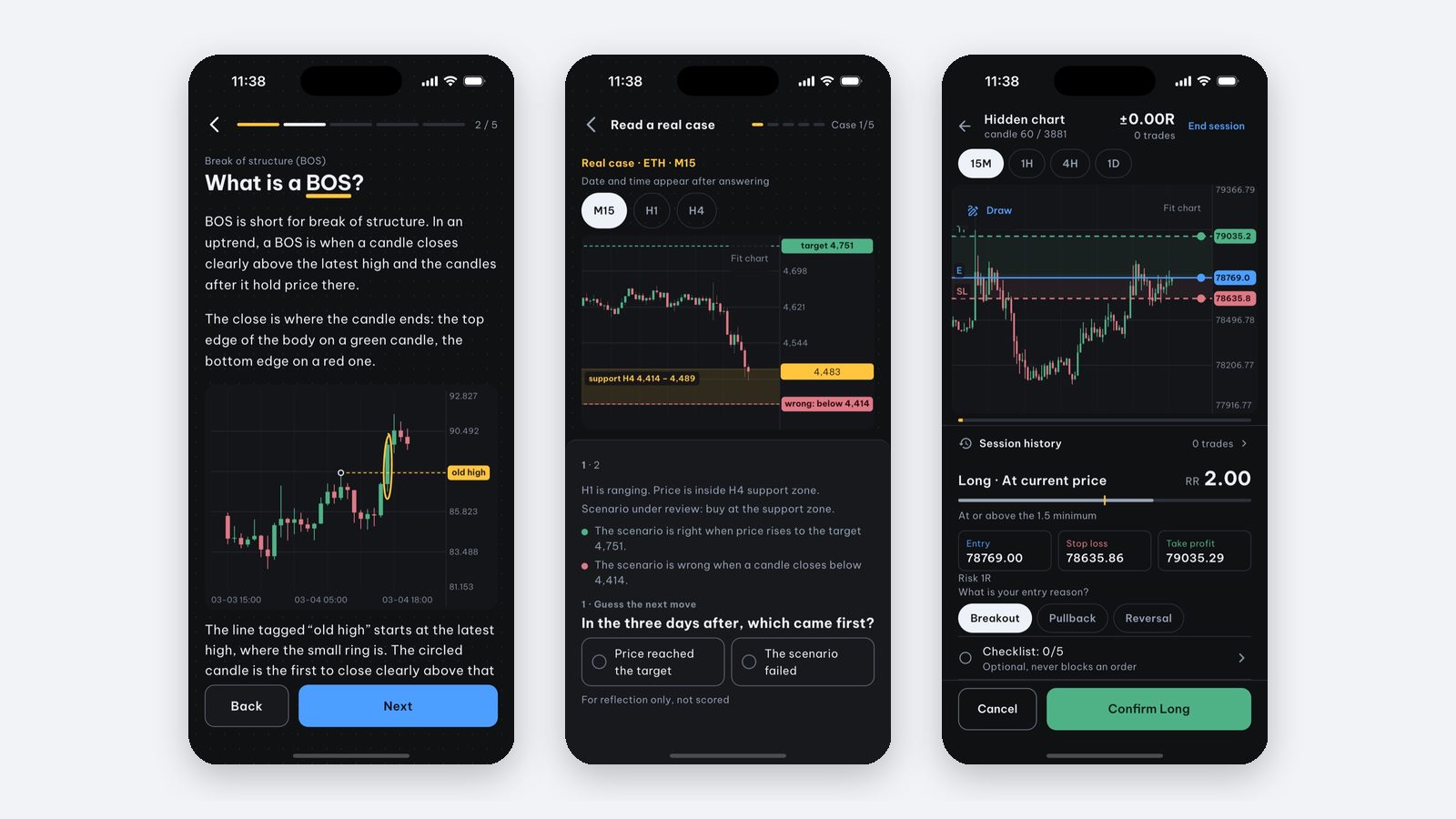
Price Action Trading Simulator offers candle-by-candle historical backtesting with saved sessions and a configurable simulated fee in R. It runs on iPhone and iPad without a broker connection or real-money trading. Setup is free to view; starting a backtest needs Pro. Historical replay tests the clarity of your procedure, not live fills or your future emotional response.
Use the journal to compare the routine with what you actually did.
Source and scope: this is educational material by the Price Action Trading Simulator development team. Price/account examples are hypothetical unless identified as a historical observation; exact fills and omitted costs are assumptions, not guarantees. Our case-data methodology explains the historical sources, selection and limits.
Frequently asked questions
Why do I keep watching the chart after entering?
Check observable possibilities: unclear exits, exposure you are uncomfortable with, alerts that are not set, or a rule requiring frequent monitoring. Chart-watching alone does not identify its cause.
Can I check only when a candle closes?
Only if the written strategy and monitoring requirements permit it. A fixed stop can trigger before a candle closes, and alerts do not guarantee execution.
Do SL and TP orders guarantee my planned result?
No. Check order acceptance, trigger source, fill rules and what happens if the connection fails. Actual fills and costs can differ from a chart level.
How can I practise a monitoring routine?
Use historical replay to write exit and review rules before revealing candles, then log every intervention. This tests whether the routine is clear; it does not reproduce real-money pressure.
Written by the app’s development team. See the data, selection rules and limits of these first-party examples. Sources & method →
Keep reading
-
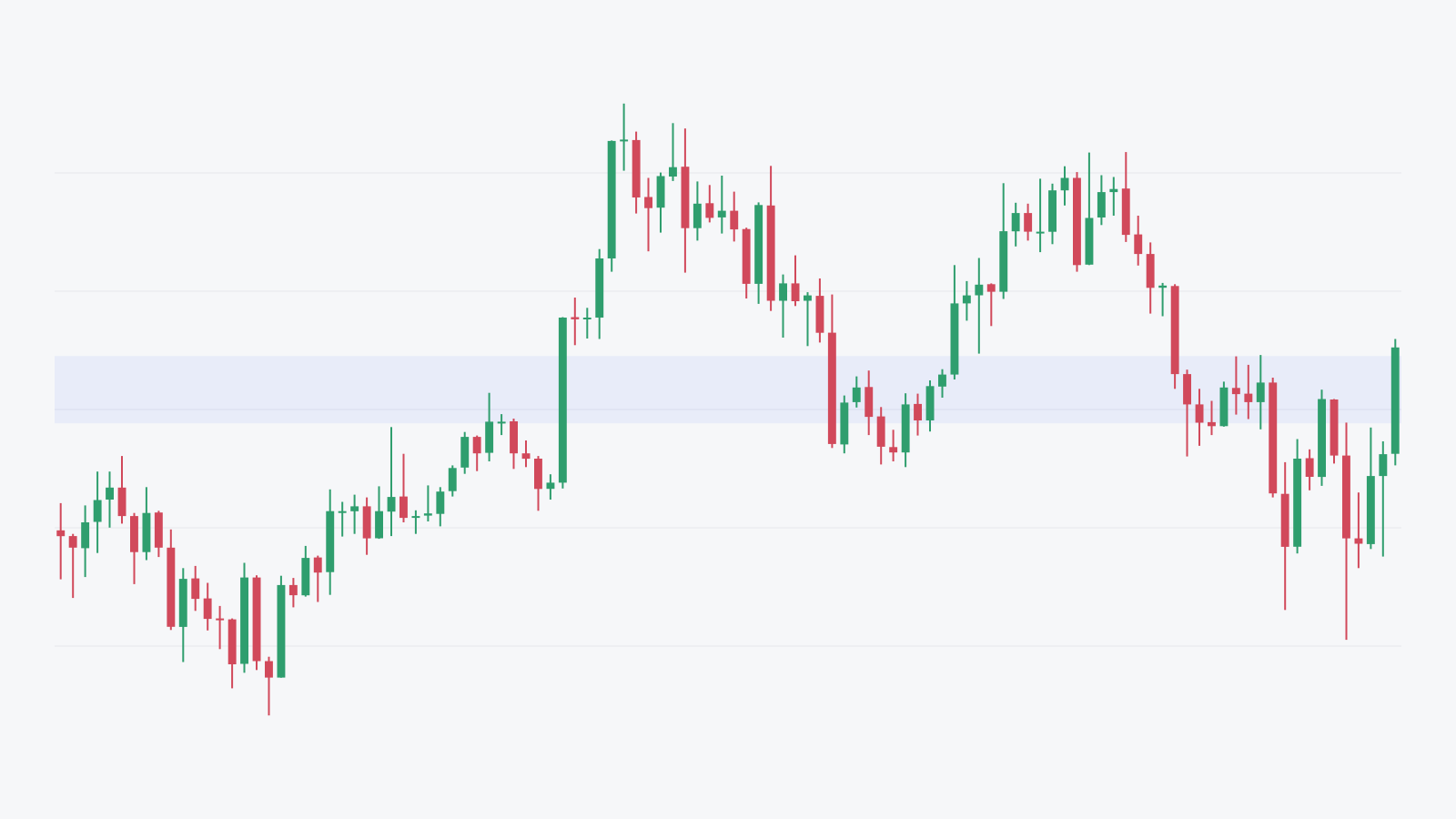
How do I write a trading plan? A fill-in template
A trading plan is one page of rules written before you trade: market, setup, entry, stop, target, risk per trade, daily loss limit and a review routine.
-
How to Stay Calm and Disciplined When Trading
Turn trading discipline into observable checks: written rules, planned risk and a record of deviations. Practice supports review, not a promise of calm.
-
How do I know if I'm overtrading, and how do I stop?
Compare your trade count with written rules, calculate assumed costs and log unplanned entries. A daily cap is a practice choice, not a universal cure.