How to Stay Calm and Disciplined When Trading
Make discipline observable: write the rule, record the decision and compare the two afterward. If you keep changing a stop, entering early or increasing size after a loss, log that specific action. A checklist can support a routine; it does not guarantee calm, remove financial risk or establish a profitable strategy.
What can I decide before entering?
Write a short plan with:
- The exact entry trigger and no-trade conditions.
- The exit rule: fixed stop, close-based invalidation or another specified method.
- Planned size, initial cash risk and cost assumptions.
- Rules for adjustments, review times and session limits.
A stop order is not the same as waiting for a candle close; see where to place a stop. Writing an adjustment rule first makes later review possible, but the rule still needs testing.
What does smaller risk change mathematically?
Consider a hypothetical 1,000 USD balance and five consecutive full planned losses. Each trade risks a fixed fraction of the balance then remaining; there are no fees, gaps or slippage.
| Fraction risked | Balance after five losses | Drawdown |
|---|---|---|
| 1% | 1,000 × 0.99⁵ ≈ 951 USD | About 4.9% |
| 2% | 1,000 × 0.98⁵ ≈ 904 USD | About 9.6% |
| 5% | 1,000 × 0.95⁵ ≈ 774 USD | About 22.6% |
| 10% | 1,000 × 0.90⁵ ≈ 590 USD | About 41.0% |
The table compares exposure under stated assumptions. It does not predict a losing streak, measure stress or make 1% a safe recommendation. Actual losses can exceed a planned stop amount. Risk management basics explains the arithmetic.
How can I review a lapse without inventing a diagnosis?
Use a row such as: “Rule: enter after M15 closes above X. Action: entered two minutes before close. Context: wrote that I feared missing the move. Next exercise: record the closing timestamp before any decision.”
That is more testable than “I have bad psychology.” Also record compliant losses. If a rule loses after costs across a careful test, perfect compliance cannot repair its economics. See win rate, payoff and costs.
A short practice routine
Choose a fixed period for a historical replay exercise, hide the future and write every decision first. At the end, count decisions matching the same rule version, list exceptions and choose one change to the exercise. Do not treat a high compliance percentage or a short profitable batch as proof of live readiness.
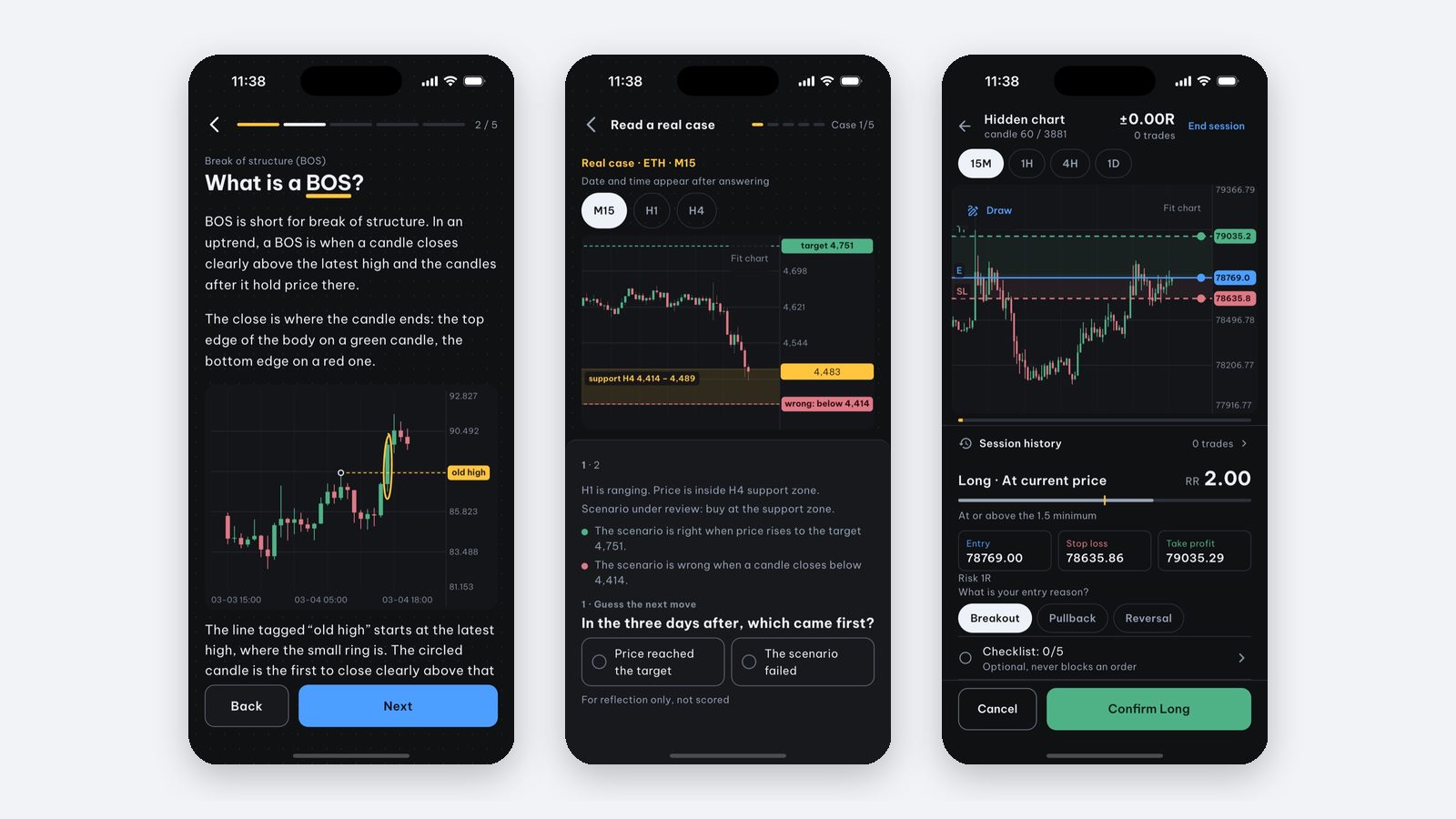
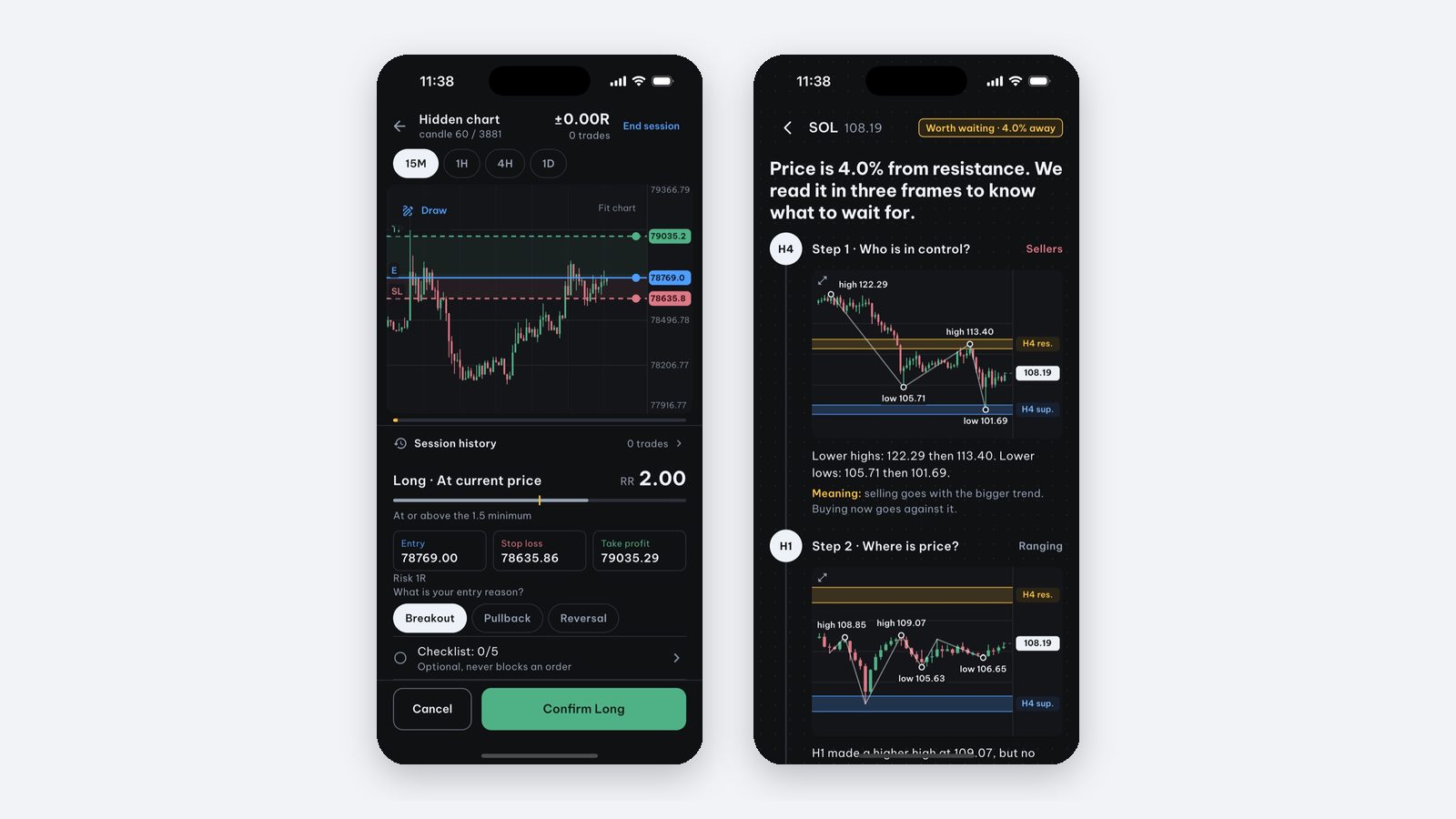
Price Action Trading Simulator has historical real-case exercises and manual backtesting on iPhone and iPad. It uses no real money and has no broker connection. One real-case session of five cases is free; starting a backtest needs Pro. Saved sessions support review, while real costs, fills and financial pressure remain outside the simulation.
For a concrete record, use the journal template. This article offers process exercises, not a psychological assessment or evidence that practice cures trading stress.
Source and scope: this is educational material by the Price Action Trading Simulator development team. Price/account examples are hypothetical unless identified as a historical observation; exact fills and omitted costs are assumptions, not guarantees. Our case-data methodology explains the historical sources, selection and limits.
Frequently asked questions
How can I practise trading discipline?
Write a checkable rule before the decision, record whether you followed it and review one observable deviation at a time. Rehearsing this routine in simulation does not establish how you will respond to real financial loss.
Does risking 1% make trading stress-free?
No. A percentage describes exposure, not your emotional response or a safe amount. Compare the arithmetic of losses without assuming any percentage makes trading suitable.
Is a loss always a discipline problem?
No. A compliant trade can lose, and a rule can lose even when followed consistently. Evaluate net strategy evidence separately from whether you followed your plan.
What should my checklist include?
The written trigger, exit rule, position calculation, costs, session limits and a reason for any exception. Keep the fields observable rather than diagnosing yourself from a short checklist.
Written by the app’s development team. See the data, selection rules and limits of these first-party examples. Sources & method →
Keep reading
-
Can't Stop Watching the Chart After Entering a Trade? What to Do
If you keep checking an open trade, review exposure, exit rules and monitoring needs. A candle-close schedule only fits a rule designed to use closes.
-
What is FOMO in trading and how do I stop chasing big candles?
If you chase a move outside your plan, compare the changed risk-reward and log the decision. A worked example separates arithmetic from FOMO claims.
-
Trading journal: what to record and how to review mistakes
Record rules and planned risk before entry, then actual fills, costs and compliance. A journal separates execution mistakes from an untested strategy.