How do I calculate position size from my stop loss? Worked examples
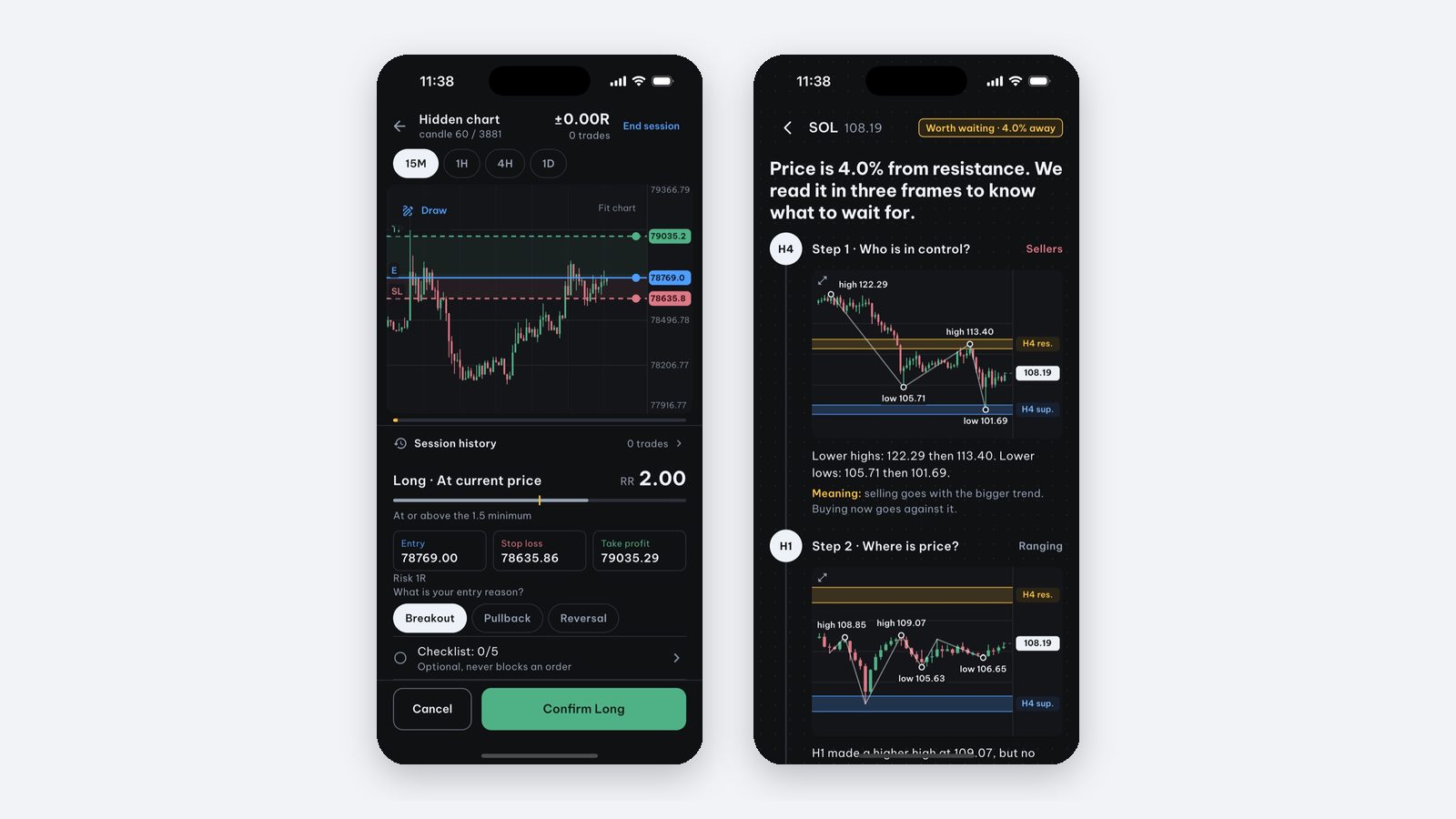
For a linear position before costs: units = chosen cash risk ÷ (stop distance × cash value per unit of price movement). This estimates planned loss at an assumed entry and stop fill. It does not guarantee a maximum loss or select a suitable risk budget for you.
What assumptions belong with the formula?
Specify the account and quote currencies, contract size, linear or nonlinear payoff, stop trigger, fill price and costs. A stop trigger is not a guaranteed execution price. Gaps, slippage, changing conversion rates, liquidation and funding can change the result. Stop-order and close-based exits must be modelled separately.
For a cost-aware linear example, let B be the cash risk budget, F fixed round-trip cost, d stop distance, v cash value per unit per price point, and k assumed variable round-trip cost per unit:
Units = (B − F) ÷ (d × v + k), provided B exceeds F.
It is still an assumed model. Round down to an allowed quantity, then recheck planned loss, minimum notional, available cash and margin. Rounding down limits the modelled amount; it does not cap actual loss.
Example 1: SOL/USDT with a USDT risk budget
Hypothetical values, not a historical trade: budget 10 USDT, entry 165, stop fill 162.50, one SOL per unit, no costs. Stop distance is 2.50 USDT per SOL:
- Units = 10 ÷ 2.50 = 4 SOL.
- Position value = 4 × 165 = 660 USDT.
- Exact stop fill: 4 × 2.50 = 10 USDT planned loss.
If assumed variable costs are 0.05 USDT per SOL and fixed costs are zero, units = 10 ÷ (2.50 + 0.05) ≈ 3.9216 SOL before rounding. A worse fill can exceed that budget. USDT and USD are different currencies; convert explicitly for a USD account instead of silently assuming parity.
Example 2: conditional EUR/USD lots
Assume a USD account, a linear contract of 100,000 EUR per lot and a pip of 0.0001 USD per EUR. One pip per lot is 100,000 × 0.0001 = 10 USD. With a chosen 10 USD budget and a 20-pip stop:
Lots = 10 ÷ (20 × 10) = 0.05 lot, before costs and quantity constraints.
A different contract or account currency needs a different conversion. This is arithmetic under stated specifications, not a claim about every broker.
Example 3: conditional gold contract
Assume a broker contract of 100 ounces per lot, with a 5 USD-per-ounce stop distance and a 10 USD budget. Lots = 10 ÷ (5 × 100) = 0.02, before costs. A minimum order larger than 0.02 would make that modelled budget infeasible; do not round up to fit.
This conditional broker example is separate from the app’s GC=F gold futures history displayed as XAU/USD. The app does not provide a spot/CFD feed or establish broker lot, margin or sizing specifications. See the data methodology.
What about leverage?
For an unchanged linear quantity and identical fills, price P/L is unchanged by the margin fraction alone. But leverage can make larger exposure possible and introduce liquidation before a planned exit; funding and margin rules also matter. A stop-distance calculation is not a complete leveraged-risk model.
What can I practise in the app?
Price Action Trading Simulator supports placing entry, stop and target in manual historical replay, with a configurable simulated fee in R and saved sessions. It has no broker connection or real-money trading. It is not a broker contract or margin calculator. Setup is free to view; starting a backtest needs Pro.
For a self-check, choose a paper risk budget, state the assumptions and calculate units outside the app before replaying a decision. Compare your calculation with the assumed exit and costs in a journal.
Source and scope: this is educational material by the Price Action Trading Simulator development team. Price/account examples are hypothetical unless identified as a historical observation; exact fills and omitted costs are assumptions, not guarantees. Our case-data methodology explains the historical sources, selection and limits.
Frequently asked questions
How do I calculate position size?
For a linear position before costs, units equal chosen cash risk divided by stop distance times cash value per unit of price movement. This estimates planned loss at an assumed fill; it does not guarantee a maximum actual loss.
Does leverage change risk?
It changes financing and margin requirements; it can also introduce liquidation and funding exposure. The simple stop-distance formula does not model these. Verify the instrument’s full contract and margin rules.
How many EUR/USD lots does a 20-pip stop allow?
In the conditional example of a USD account, 100,000 units per lot and 10 USD planned risk, a 20-pip stop gives 0.05 lot before costs. Contract and minimum-size rules must be checked; the account balance alone cannot determine size.
Is the app’s XAU/USD the same as a broker gold contract?
No. The app replays Yahoo’s GC=F COMEX gold futures series under an XAU/USD label. That is not a spot or CFD feed, and it does not establish your broker’s lot size or execution rules.
Written by the app’s development team. See the data, selection rules and limits of these first-party examples. Sources & method →
Keep reading
-
Where should I place my stop loss? A price action guide
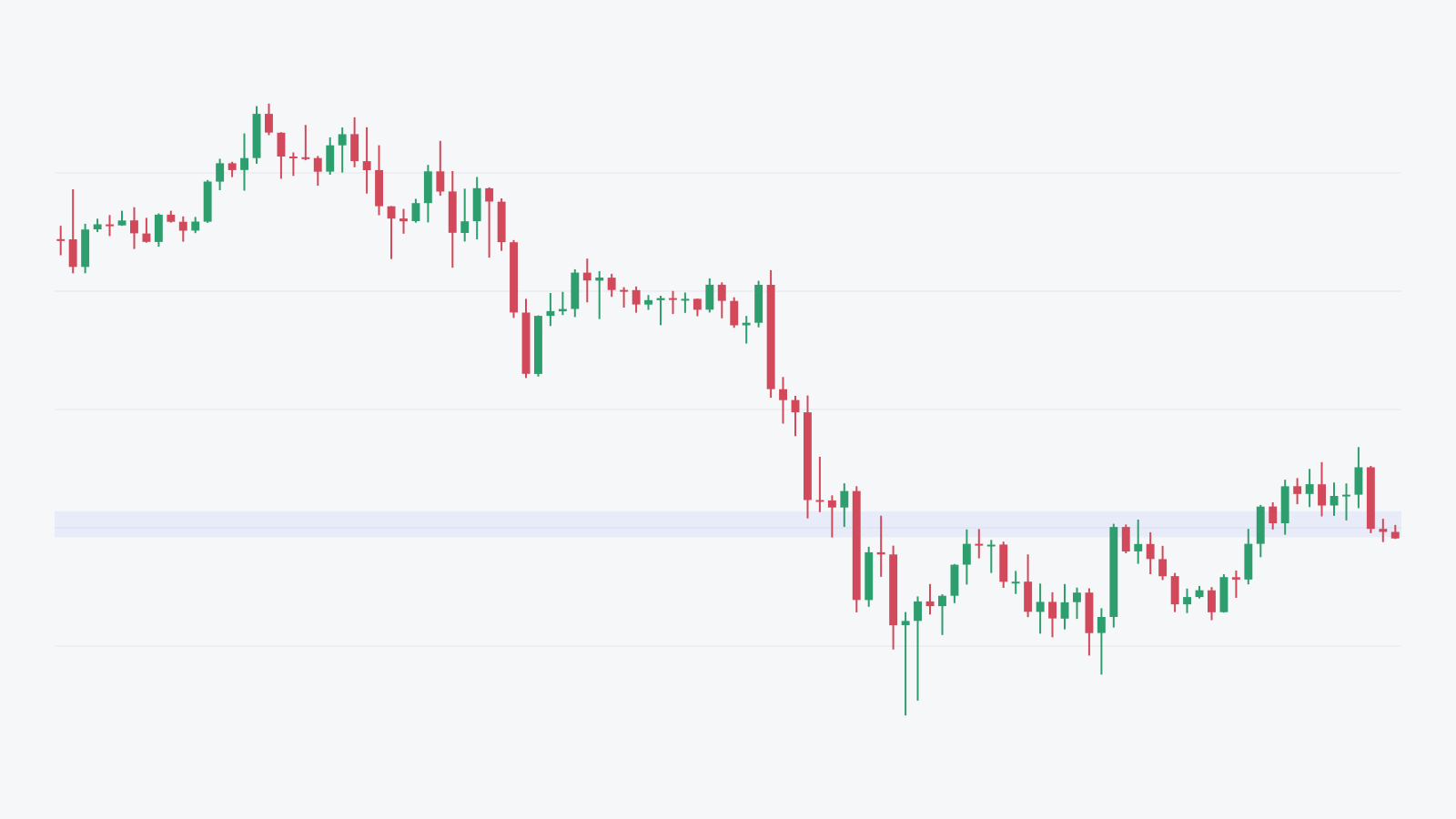
Choose an exit rule before sizing a trade. A fixed stop and a candle-close invalidation are different; a real SOL timeline shows why fills matter.
-
How much should a beginner risk per trade? Risk management basics
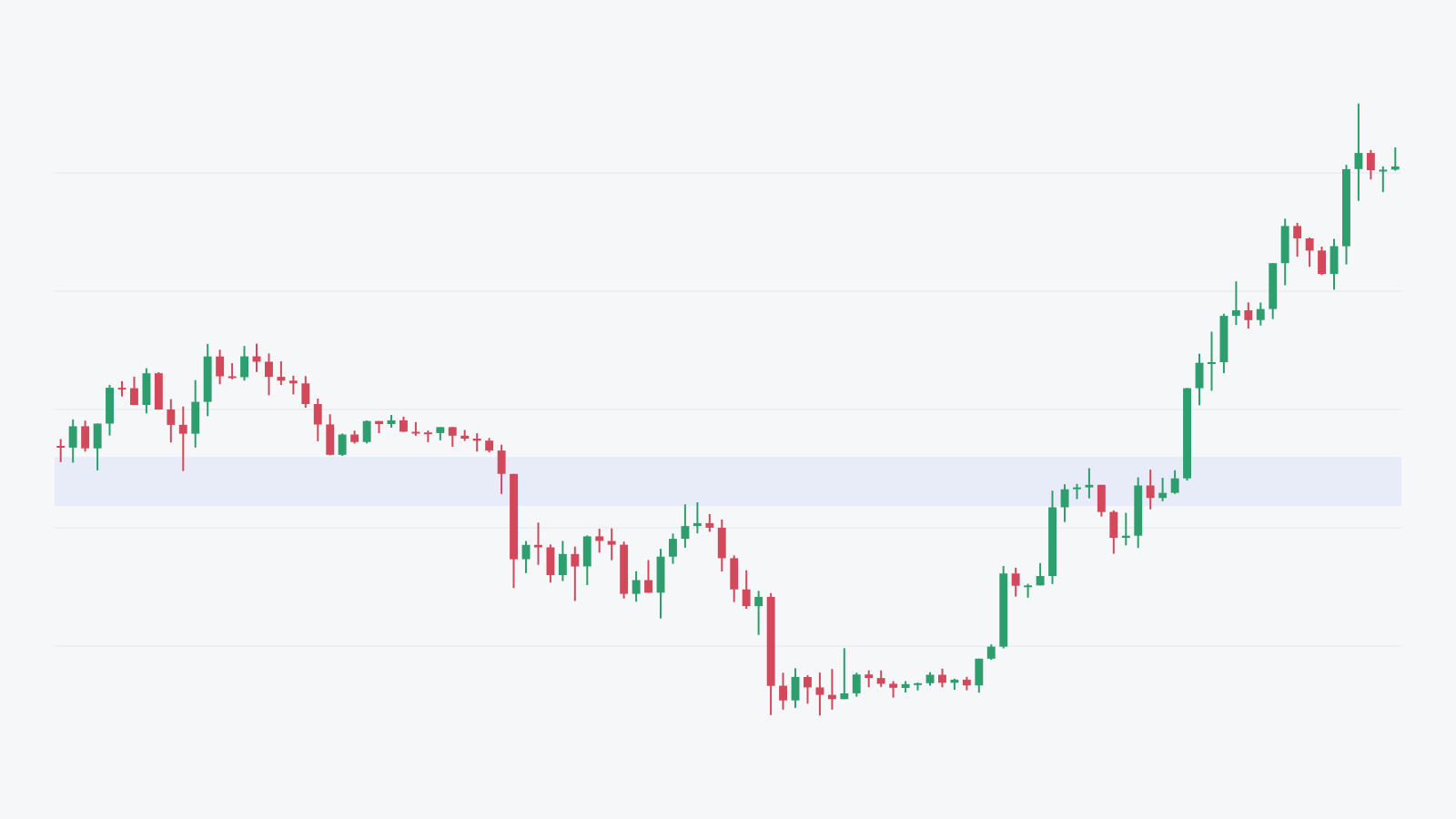
Learn planned risk, R and drawdown with hypothetical examples. A 1% rule is a chosen budget, not a safety threshold or guaranteed stop-loss limit.
-
What Is Risk-Reward Ratio? The Win Rate You Need to Break Even
R:R compares planned risk and reward. With fixed +2R wins and −1R losses, break-even is 33.3% before costs. Examples show why targets are not realised payoffs.