I study trading but still feel lost. What should I practise?
Start with the first small task you cannot perform on an unseen chart. “I do not understand trading” is too broad to practise. You may be missing a term, an observable entry condition, risk arithmetic or a way to review decisions. More videos may not resolve the same gap; a brief self-check can identify a useful next exercise.
Which task stops you?
| What happens when the chart is paused? | A task to practise next | Useful guide |
|---|---|---|
| You cannot distinguish open, close and wick | Describe one completed candle without predicting | The app’s free candle lessons |
| You name a pattern but cannot state an entry condition | Write a checkable trigger and a no-trade condition | Patterns but no entry |
| You cannot say how much a stop could cost | Calculate stop distance and position units | Position sizing |
| You change the explanation after each outcome | Record the reason before revealing the next candle | Trading journal |
| You can follow rules but do not know if they work | Separate a process exercise from a strategy test | Evidence for price action |
These are possible learning gaps, not diagnoses or measured user categories. There is no requirement to trade while you work through them.
Try a 15-minute diagnostic exercise
This is an optional schedule, not a validated training dose:
- Five minutes: choose one historical chart without its future. Write facts you can verify, such as the last completed close or the boundaries of a level.
- Five minutes: write one conditional decision: “wait until X” or “stand aside because Y is unclear.” If you cannot define X, mark it missing instead of inventing an entry.
- Five minutes: reveal more candles and review whether your original statement was clear. Write one question for the next session.
A price move in your favour is not proof that the reasoning was correct. A move against you does not automatically make the exercise wrong. The output is a clearer record of what you understood and what you did not.
A small arithmetic self-check
Hypothetical values: risk budget 10 USD, entry 100, stop 98. Stop distance is 2, so a linear position of 10 ÷ 2 = 5 units risks 10 USD at an assumed exact stop fill, before costs. If your answer was 10 units, practise the calculation before adding a new strategy. This example does not set a safe personal risk budget.
How should I ask an AI for help?
Give the task and what is unclear: “On this chart I marked X using these visible candles. My proposed rule is Y. Which part is ambiguous, and what would I need to record to test it?” Ask it to distinguish observations, assumptions and conclusions. A screenshot alone may omit timeframe, feed, costs or whether the candle has closed. Check any answer against your data; an AI explanation is not a signal or independent proof of an edge.
Where can the app fit?
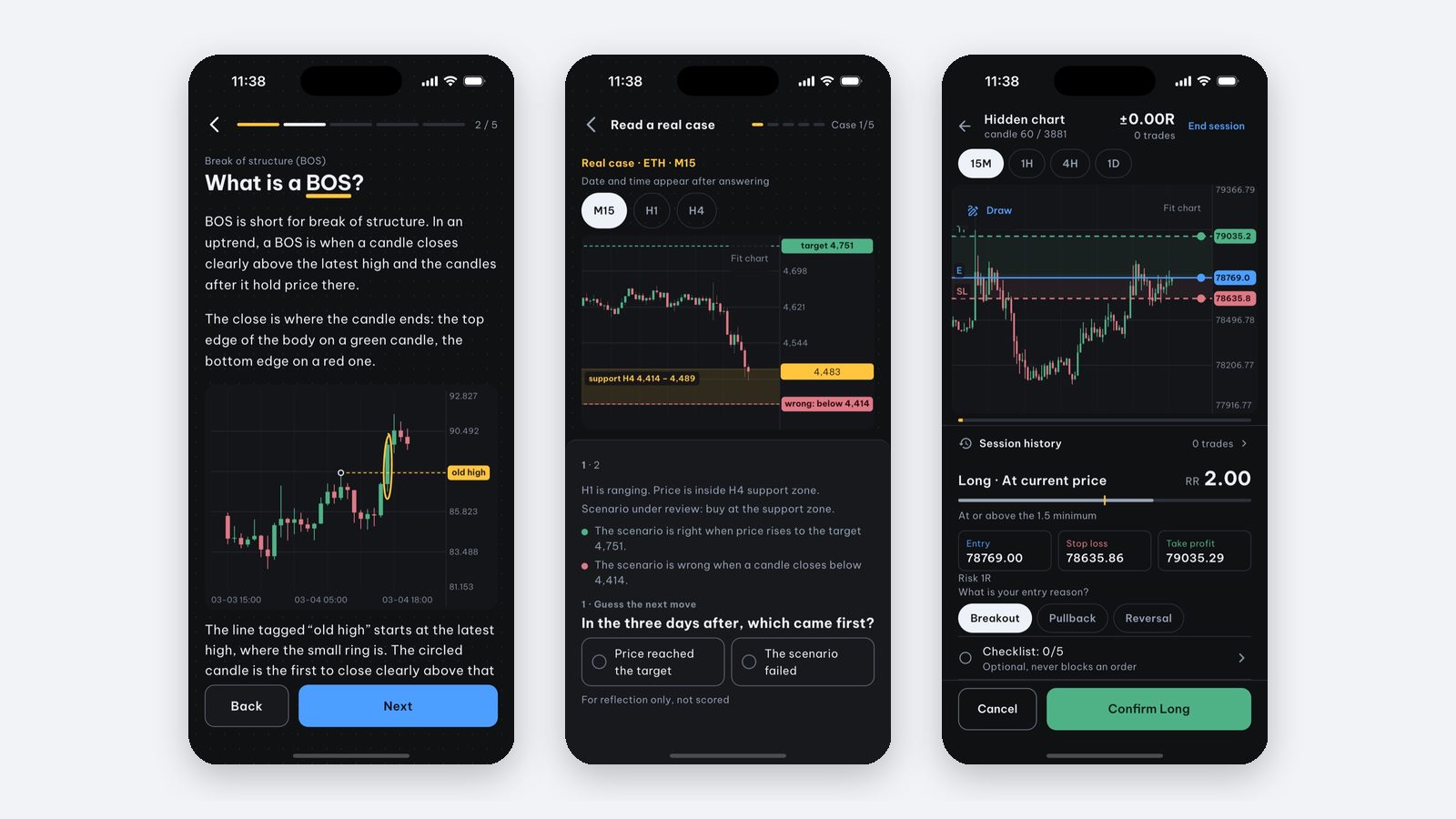
Price Action Trading Simulator offers a chart-reading check, lessons, chart exercises and historical decision practice on iPhone and iPad. The first three candle lessons, opening check and one five-case session are free. Entry drills and starting manual backtests need Pro. It has no real-money trading or broker connection.
Use it if the identified task is chart reading or manual decision rehearsal. If you need an automated strategy test or broker-synced journal, see which practice tool fits the task. The methodology explains what our examples can establish.
Frequently asked questions
Why do I still feel lost after studying trading?
The feeling alone does not reveal the cause. Check which observable task is unclear: describing a candle, identifying context, writing an entry rule, sizing a position or reviewing a decision. Practise that task separately.
Should I learn more strategies or practise one task?
If you cannot apply what you already studied to an unseen chart, first isolate that gap. One clearly defined task makes the next exercise measurable; it is not a promise that one strategy will be profitable.
What can I practise if I do not know what I need?
Hide the chart’s future, describe what is visible, write what information is missing and choose enter, wait or stand aside with a reason. Review the clarity of that record rather than treating a lucky outcome as understanding.
Written by the app’s development team. See the data, selection rules and limits of these first-party examples. Sources & method →
Keep reading
-
Know candlestick patterns but not when to enter? How to practice
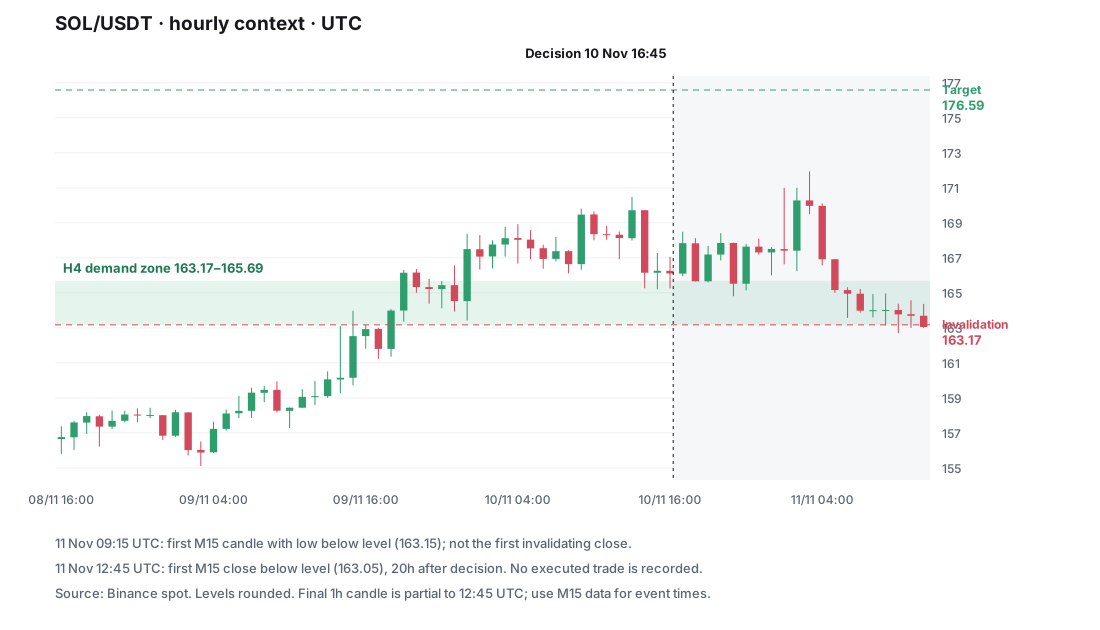
You spot candlestick patterns on finished charts but freeze on a live one? How to practice trade entries on real cases, with a worked example and data.
-
How do I write a trading plan? A fill-in template
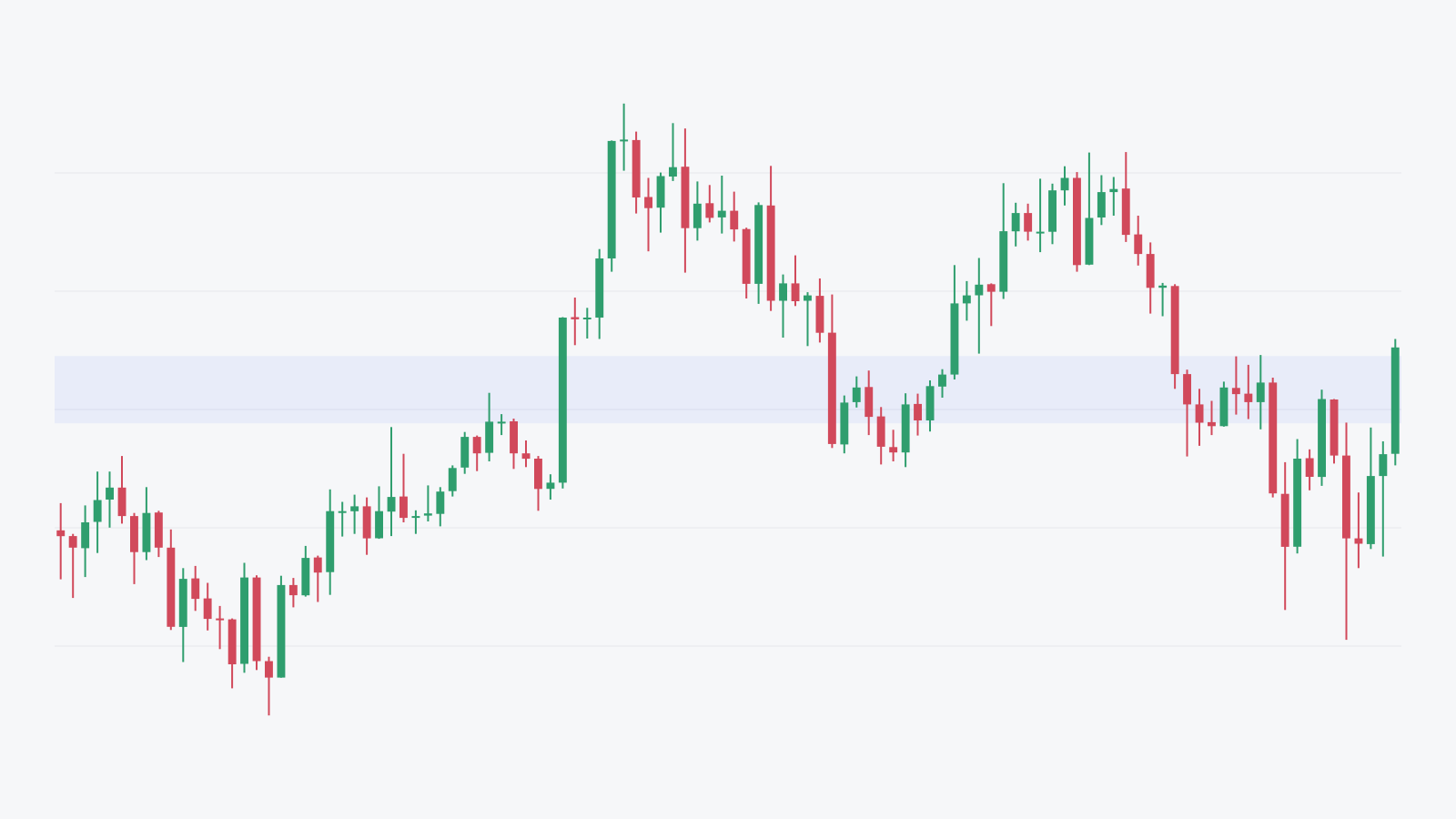
A trading plan is one page of rules written before you trade: market, setup, entry, stop, target, risk per trade, daily loss limit and a review routine.
-
Which tool should I use to practise price action?
Choose a price action practice tool by your learning goal, device, market data and review needs. A documented comparison with clear product limits.